

Buying & education guide · Singapore
How long should a laptop last?
Most laptops give three to five years of comfortable use, and a well-built one reaches five to eight years or more. But the badge on the lid decides far less than you would think — build quality, heat, the battery and how you look after it matter more. This guide explains what really sets a laptop's lifespan in Singapore, and how to stretch yours.
Expect three to five years of easy use from a typical laptop, and five to eight years or more from a well-built business or premium machine. Lifespan is set far more by heat, build quality, battery wear, storage type and how hard the laptop is worked than by its brand. The battery almost always ages first, followed by storage, thermal paste, hinges and keyboards — every one an individually replaceable part. Keep a laptop cool and clean, fit an SSD and enough RAM, replace the battery when it fades and service the thermals every couple of years, and you will comfortably reach the top of that range. Replacement only really wins once the machine drops out of software support or several major parts fail at once.
On this page
How long a laptop typically lasts
Ask ten people how long a laptop should last and you will get ten answers, most of them anchored to whatever their last machine did. The honest, evidence-based ranges are narrower than the folklore suggests. A typical consumer laptop gives roughly three to five years of comfortable, everyday use before it starts to feel its age. A well-built business or premium machine — the kind with a metal chassis, a better cooling system and serviceable parts — will happily reach five to eight years or more if it is looked after. Plenty of the laptops that come across our bench are older than that and still earning their keep.
Notice that these are ranges, not deadlines. A laptop does not stop working the day it turns five; it simply reaches the point where an ageing part or two needs attention. The difference between a machine that is retired at four years and one that serves happily at seven is rarely the brand on the lid. It is the handful of factors below — and every one of them is something you have at least some control over.
What actually determines lifespan
Lifespan is not a single number baked into the laptop at the factory. It is the sum of several things, some set by the machine's design and some set by how it lives its life:
- Build quality. A well-engineered chassis with generous cooling, a metal body and parts that can be opened and replaced will outlast a thin, sealed, plastic machine built to a tight price. This is the single biggest design factor, and it is why a mid-range business laptop often outlives a flashier consumer one.
- Heat and dust. Heat is the quiet killer of electronics, and Singapore's warm, humid air makes it more of a factor here than in cooler climates. Dust clogs vents and fans, temperatures climb, and the thermal paste that carries heat away from the processor dries out faster. A laptop that runs hot its whole life ages faster than an identical one that stays cool.
- Battery wear. The battery is a consumable — it loses a little capacity with every charge cycle and every hot day. Left unmanaged it becomes the first part to feel worn out, though it is also one of the easiest to renew.
- Storage type. A laptop still running a mechanical hard drive is both slower and more failure-prone than one on a solid-state drive. An SSD has no moving parts, shrugs off knocks, and transforms how long a machine stays pleasant to use.
- How hard it is used. A machine that spends its days on email and documents ages far more gently than one rendering video or gaming for hours. Heavier workloads mean more heat, more fan wear and a harder-working battery.
- Software support windows. Hardware can outlast its software. When a laptop stops receiving operating-system and security updates, its useful life is capped regardless of how healthy the parts are — a point worth checking before you invest in upgrades.
Read that list again and you will spot the pattern: most of what shortens a laptop's life is heat, wear and neglect, and most of it is manageable. That is the whole reason a maintenance habit pays off, and it is the thread running through the rest of this guide. Our laptop maintenance checklist turns these factors into a simple routine.
The parts that fail first
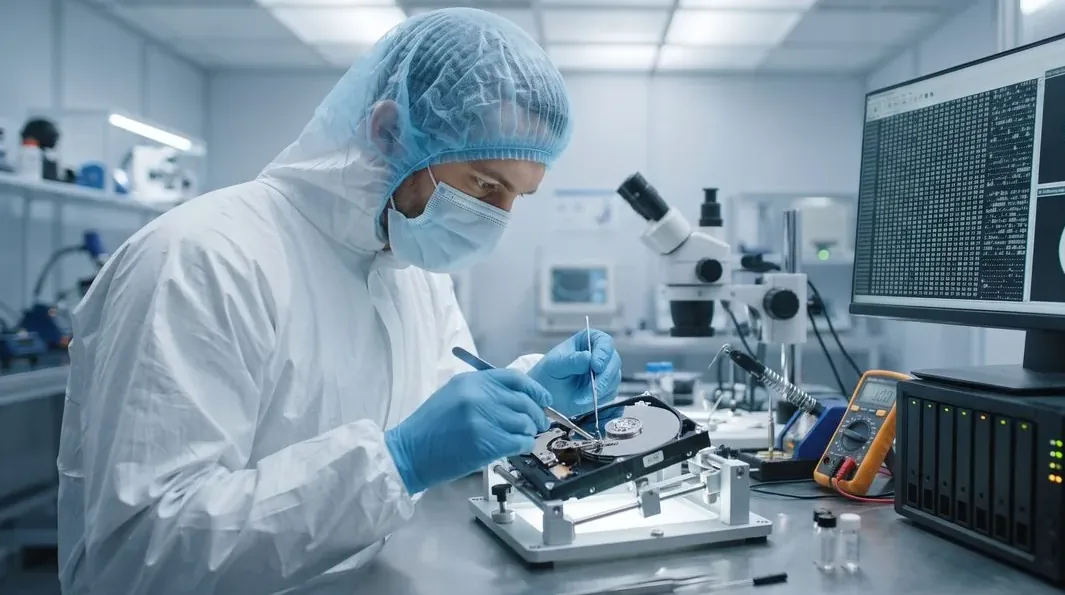
Laptops rarely die all at once. They age one component at a time, and the order is remarkably predictable. Knowing which part is likely to go first tells you where to spend your attention — and your money — to keep a machine alive.
- The battery, almost always first. Because it wears with every cycle, the battery is usually the first thing to feel tired, often somewhere between two and four years in. Runtime drops, then the machine starts needing to stay plugged in, and occasionally the cell swells — a safety issue you should never ignore. A battery replacement resets this completely.
- Storage, on older machines. Laptops that still run a spinning mechanical hard drive can develop bad sectors and slow to a crawl or fail outright. Moving to an SSD both speeds the machine up and removes a common point of failure. Whatever your storage, a backup means a drive fault never becomes lost files.
- Thermal paste and cooling. The paste between the processor and its heatsink dries out over a few years — faster in our climate — and the fans fill with dust. The machine then runs hot, throttles itself and feels sluggish. A fan and thermal service is the cheapest, highest-value maintenance there is.
- Hinges. Opened and closed thousands of times, hinges loosen, stiffen or crack, sometimes taking screen wiring or mounting points with them. Caught early they are a straightforward fix.
- The keyboard. Constant physical contact, the odd spill and years of use wear keys out. A keyboard replacement is an everyday job that brings a tired machine back to life.
The reassuring theme here is that the first things to fail are also among the cheapest to fix. None of these is a reason to write off a laptop. Each is a single, replaceable part, and swapping it is a small fraction of the cost of a new machine — exactly the kind of work our laptop repair bench handles every day.
Signs your laptop is ageing
Ageing shows itself long before a laptop actually stops working, which is fortunate, because early signs give you time to act cheaply. Watch for these:
- The battery barely lasts. If a full charge no longer gets you through a meeting, the cell is worn. If the case or trackpad is bulging, stop using it and get the battery replaced now.
- Fans roar while the machine crawls. Loud fans paired with sluggishness almost always mean heat — dried paste, clogged vents, or both — rather than a machine that is simply "old".
- Slowdowns, freezes and crashes. Frequent stalls can be storage on its way out, too little RAM for what you now ask of it, or thermal throttling. Each has a specific, affordable fix.
- Physical wear. A loose or crunchy hinge, dead keys, a flickering panel or a charging port that only works at an angle are all normal wear points on an older machine, and all repairable.
- It struggles even when healthy. If the laptop is slow at tasks it once handled easily, and a clean, cool, well-specified machine still can't keep up, that points less to a fault and more to the machine being outgrown.
The important distinction is between symptoms of a single ageing part — which are a maintenance job — and a machine that is genuinely past its useful life. Most of the signs above fall into the first camp. If you are not sure which yours is, our guide on whether to repair or replace a laptop walks through the decision in detail.
How to extend your laptop's life
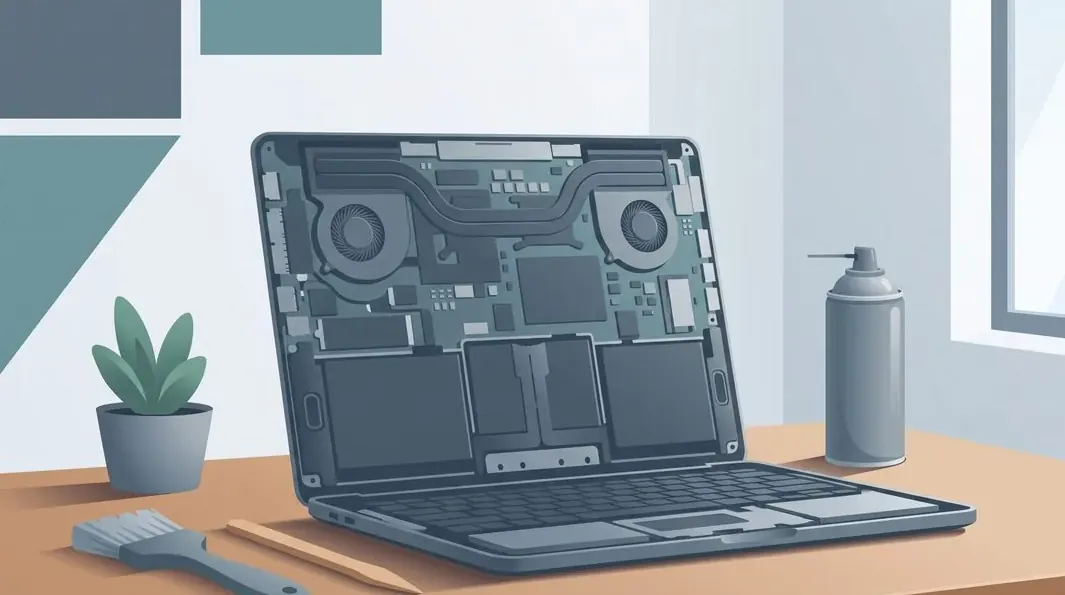
Here is the good news the folklore misses: a laptop's lifespan is largely in your hands. A machine that would otherwise be retired at four years routinely serves happily to seven or eight with a few sensible upgrades and habits. These are the moves that make the biggest difference, roughly in order of impact:
- Fit an SSD. If you are still on a mechanical drive, an SSD upgrade is the single most transformative change you can make. Boot times, app loading and general responsiveness all leap forward, and the machine instantly feels years younger.
- Add RAM. More memory lets a laptop keep more running at once without slowing down — often the difference between a machine that feels tired and one that keeps up with modern browsers and apps.
- Replace the battery when it fades. A fresh battery restores portability and removes the safety risk of a swelling cell. It is a small cost for a machine that otherwise has years left.
- Service the thermals. Have the fans cleaned and the thermal paste refreshed every couple of years — more often in Singapore's climate. A thermal service keeps temperatures down, which protects the board and keeps performance up.
- Keep it cool and clean. Use the laptop on a hard surface so its vents can breathe, keep it out of hot cars and direct sun, and don't leave it pinned at full charge in a warm room all day. Small habits, real years added.
- Back up your files. This does not extend the hardware, but it protects what actually matters. With a backup in place, a hardware fault stays a hardware problem rather than becoming lost data.
Taken together, an SSD, adequate RAM, a fresh battery and a thermal clean effectively reset the clock on the parts that age fastest — for a fraction of the cost of a replacement. That is the core idea behind our maintenance checklist, and the reason so many machines we service go on for years longer than their owners expected. If you would like a technician to look over an ageing laptop and tell you which upgrades are worth it, ask us for a free assessment.
When longevity tips into replacement
Stretching a laptop's life is usually the smart, economical choice — but not forever. There are honest cases where the sensible move is a new machine rather than another repair, and we would rather tell you that than sell you an upgrade you will regret:
- Software support has ended. When a laptop no longer receives operating-system and security updates, its useful life is capped no matter how sound the hardware is. This is the clearest end-of-life signal.
- Several major parts have failed at once. A failing screen, a swollen battery and a dying drive together add up fast, and each fix does nothing for the others.
- The repair costs more than a comparable replacement. As a rule of thumb, once a single major repair on an older machine approaches or passes the cost of a similar replacement, replacement usually wins.
- You have simply outgrown it. If the laptop is too slow for what you now do even when it is clean, cool and healthy, no upgrade fixes that, and money spent on it is money spent on a machine you had already moved past.
Even then, replacement does not mean your data is gone — the storage can almost always be read, and our data recovery service exists for exactly that. The one thing we would never do is guess. Every one of these decisions rests on knowing what is actually wrong and what the fix would cost, which is what a diagnosis gives you. Our full repair-or-replace guide lays out the framework in detail, and the way we assess and quote every job is set out in our laptop repair process.
Get an honest read on your laptop
Whether your laptop has years left in it or is genuinely near the end usually comes down to one part and one figure — and neither is something you can guess from the sofa. Bring the machine in, or send a photo and a description of what it is doing, and we will tell you what is wearing out, what it would cost to put right, and whether that is money well spent at its age. Diagnosis is free on walk-ins and there is no obligation to proceed. If a fresh battery and an SSD will buy you three more good years, we will say so; if it is time to replace, we will tell you that too.
Keep reading
Guides to help your laptop last
Should you repair or replace?
The framework we use to decide when a laptop is worth fixing and when it isn't.
Read the guide →Laptop maintenance checklist
The simple routine that keeps a laptop cool, fast and healthy for years.
Read the guide →How to protect your laptop battery
Habits that slow battery wear and keep runtime where it should be.
Read the guide →Questions we get every week
Laptop lifespan — frequently asked questions
How many years should a laptop last?
Most laptops give three to five years of comfortable, everyday use, and a well-built business or premium machine will happily reach five to eight years or more with a little care. The number is not fixed by the brand badge — it is set by how the machine is built, how hot it runs, how heavily it is used and whether it still gets software updates. A modestly specified laptop that is kept cool and clean, given an SSD and a fresh battery when needed, will comfortably outlast an expensive one that lives in a hot bag and never gets serviced. Think of the headline figure as a starting point, not a deadline.
Does Singapore's climate shorten a laptop's lifespan?
It can, if you let it. Singapore's constant heat and high humidity are harder on electronics than a cooler, drier climate. Heat accelerates battery wear and dries out the thermal paste that keeps the processor cool, while humidity encourages corrosion on the board over time, especially where a machine is used near open windows, in cars or in air that swings between cold air-conditioning and warm outdoors. None of this is dramatic day to day, but it means a laptop here benefits more than most from good airflow, regular internal cleaning and a thermal service every couple of years. Treated well, a laptop lasts just as long in Singapore as anywhere else.
Which part of a laptop usually fails first?
The battery, almost every time. It is a consumable that loses capacity with every charge cycle, so it is usually the first thing to feel worn out, often within two to four years. After that the common wear points are storage on older laptops with a mechanical hard drive, dried-out thermal paste that makes the machine run hot and slow, and mechanical parts such as hinges and keyboards that see constant physical use. The good news is that every one of these is an individually replaceable part rather than a reason to retire the whole machine, and each fix is cheap relative to a new laptop.
Is it worth upgrading an old laptop instead of replacing it?
Very often, yes. If the machine is fundamentally sound, an SSD upgrade and extra RAM are the single biggest improvements you can make, and together they make a three or four year old laptop feel new again for a fraction of the price of replacing it. Add a fresh battery and a thermal clean and you have effectively reset the clock on the parts that age fastest. Upgrades make the most sense on a machine that still meets your needs and still receives software updates; if the laptop is already too slow for what you do even when healthy, that is when replacement starts to make more sense.
What are the signs that a laptop is reaching the end of its life?
The everyday signs are a battery that barely lasts an hour, fans that roar while the machine crawls, frequent slowdowns or crashes, a swelling battery that lifts the trackpad or case, and physical wear such as a loose hinge or failing keys. On their own, most of these point to a single ageing part that can be replaced rather than the end of the road. The genuine end-of-life signals are different: the machine no longer receives security updates, several major parts have failed at once, or a repair would cost more than a comparable replacement. Until you reach that point, ageing is usually a maintenance job, not a funeral.
How can I make my laptop last longer in Singapore?
Keep it cool and clean, look after the battery, and service it before problems compound. Use the laptop on a hard surface rather than a bed or lap so the vents can breathe, have the fans cleaned and the thermal paste refreshed every couple of years, and avoid leaving it charging at one hundred percent in a hot room all day. Move to an SSD if you are still on a mechanical drive, keep a little free storage, and back up your files so a hardware fault never becomes a data loss. Small habits like these routinely add years to a laptop's working life, and a quick service is far cheaper than a new machine.
Want more years out of your laptop?
A free, no-obligation diagnosis tells you what is wearing out, which upgrades are worth it, and how much life is left in the machine. Walk in, or send a photo and we will give you our honest read before you spend anything.